 CCleaner (formerly known as Crap Cleaner) is a system optimization and privacy tool. It removes unused files from your system - allowing Windows to run faster and freeing up valuable hard disk space.
It cleans: Internet Explorer (Temporary files, URL history, cookies, Autocomplete form history, index.dat); Firefox (Temporary files, URL history, cookies, download history); Windows (Recycle Bin, Recent Documents, Temporary files, and Log files); Registry cleaner (Advanced features to remove unused and old entries, including File Extensions, ActiveX Controls, ClassIDs, ProgIDs, Uninstallers, Shared DLLs, Fonts, Help Files, Application Paths, Icons, and Invalid Shortcuts. So comes with a comprehensive backup feature.) Added system tray icon, added minimize to system tray option, and optimized file deletion routines.
Non-English languages supported: Albanian, Arabic, Bosanski, Bulgarian, Català, Cesky, Chinese (Simplified), Chinese (Traditional), Dansk, Deutsch, Español, Français, Galego, Greek, Hebrew, Italiano, Japanese, Korean, Lietuviu, Macedonian, Magyar, Nederlands, Norwegian, Polski, Português, Português (do Brasil), Romana, Russian, Serbian Cyrillic, Serbian Latin, Slovensky, Suomi, Svenska, Türkçe
Download CCleaner

31 May 2008
CCleaner


SanDisk Goes Extreme with Memory Stick PRO-HG Duo
 (cdrinfo) -- SanDisk Corporation introduced the fastest card in its Memory Stick product family: the SanDisk Extreme III Memory Stick PRO-HG Duo with read and write speeds of 30 MB per second. The card, available in June in 4-gigabyte (GB) and 8GB capacities, is ideal for professional photographers and advanced amateurs who use Sony digital single-lens reflex (SLR) cameras.
SanDisk and Sony jointly developed Memory Stick PRO-HG Duo as an extension of the existing Memory Stick PRO format, to offer faster read and write speeds for PRO-HG capable Sony digital SLRs, point-and-shoot cameras and digital camcorders.
SanDisk is unveiling the SanDisk Extreme III Memory Stick PRO-HG Duo at the PMA Australia 2008 Imaging Technology Show, where the company is exhibiting at Stand 401 in the Brisbane Convention & Exhibition Centre from May 30 to June 1.
"The SanDisk Extreme III Memory Stick PRO-HG Duo continues our tradition of delivering best-in-class performance in the SanDisk Extreme product line," said Susan Park, director of consumer product marketing for SanDisk's performance cards. "Our customers know SanDisk Extreme cards not only deliver cutting-edge read and write speeds, but are designed for durability - even under harsh conditions."
SanDisk Extreme III cards are capable of functioning in extreme temperatures, from -13 to 185 degrees Fahrenheit or -25 to 85 degrees Celsius, and carry a lifetime warranty. The cards also come with RescuePRO software for recovering deleted images.
BenQ’s New T850 8M Digital Camera Has Users Smiling
(designtaxi) -- BenQ announced the launch of the world’s slimmest 8-mega-pixel digital camera, the T850 with 1600 ISO, 3x optical zoom and smc PENTAX lens. Sleek and compact at 14.9mm thick, the T850’s chic stainless steel casing (available in black or red) reflects the minimalist operating ease of the camera. Exceptional efficiency and user-friendliness are made possible by the highly intuitive photo taking and photo editing functions, which center around smartly organized circular touch buttons on the 3” TFT LCD screen. Furthermore, almost all camera functions can be accessed and engaged by using one of three simple finger movements: tap, circle, swipe. In fact, the T850 standouts among touch screen cameras as the only one employing a natural “swipe” gesture for viewing photos and video. A comprehensive selection of options including “Smile Catch”, Auto Face Tracking, Z Lighting, advanced photo art, scribble & scrawl and Quick Bar make the T850 a fabulously fun companion for bringing enjoyment and quality to today’s digital life.
Photo Taking So Simple, It’s Second Nature!
Spontaneous, quick, spur-of-the-moment. Such is what defines that special moment so precious to capture in a photo. And that’s exactly what defines the T850: controls and menus so simple and second nature that capturing a spontaneous moment is a snap. No pressing button after button to navigate through multiple menus. The T850 has pared down complex camera operations to a minimalist, logical approach. Circular touch buttons (just the size of the fingertip), which can be pulled up instantly on the extra-large screen, get users to the right setting fast so the moment isn’t just a memory. Plus, the T850 features a Quick Bar that gives users even faster access to 80% of all photo taking needs. For customized convenience, users can add three of their favorite functions to the Quick Bar. Intelligently designed touch-screen icons that clearly represent their functions further eliminate the confusion typical of other complicated camera menus.
Tap, Circle, Swipe for Easy Navigation and Photo Editing
Once pictures are taken, users can easily view and enhance photos via three types of finger motions on the screen. To reset the focal point, simply tap the preferred spot on the screen, and the T850 will re-center and automatically refocus the image. To enlarge a specific portion of the image, simply draw a circle around the location with your fingertip. The T850 will instantly perform a 12x zoom to the circled area. Plus, by using the picture cropping mode, users can save the enlarged image as a new image. Playback is no longer a pain with the T850’s ingenious functionality, which includes “swipe” recognizing ability – it’s the only camera currently available to perform functions with a simple finger swipe across the screen. While reviewing pictures, swipe a finger right to left across the screen to see the next picture; swipe left to right to see the previous image. When playing video or audio content, users can tap the playback bar forward (advance) thus eliminating the hassles of restarting the content from the beginning every time.
The T850 is also equipped with advanced photo art functions. Touch screen capability lets users free-hand scribble and scrawl fun captions and drawings to photos. In addition, users can select from a numerous callout balloons and photo backgrounds/frames.
User-Friendly Conveniences
Despite a minimalist approach for operational ease, the T850 is packed with an array of thoughtful features for picture-perfect results. A high ISO 1600 lets users take pictures in dim lighting without artificial flash. “Z Lighting” enables users to adjust the image’s lighting after the photo has already been taken. The T850’s brilliant “Smile Catch” mode captures every elusive smile by automatically shooting in rapid succession, stopping only when the shutter button is pressed again. Competitors’ similar function can only shoot up to six times in succession. And for capturing life in fractions of second – such as for action shots – a “12 Burst” feature snaps 12 pictures in one second! Crisp, clear, well-defined pictures are guaranteed with a Super Shake-Free setting and Auto Face Tracking, which can fine-tune up to nine faces in one frame – perfect for scenes with many people. The T850’s 30 preset modes range from standard auto and video to more exact settings such as "Museum," "Party," "Beach" and "Fireworks."
BMW Formula One Car
 FRANKFURT (online.wsj.com) -- BMW AG is developing hybrid technology for a Formula One race car to hit the track next year, according to Mario Theissen, motor-sport director at the German auto maker.
The team is responding to new rules presented in March by Formula One's governing body, the Paris-based Fédération Internationale de L'Automobile, which will allow Formula One teams to boost the power of their cars using fuel-saving -- including hybrid -- technologies.
"From 2009 BMW will use hybrid technology in Formula One," Mr. Theissen told guests assembled for the opening of a new BMW dealership in Frankfurt late Thursday. Other Formula One teams are expected to explore similar technologies.
The FIA says it issued the rules to make new fuel-saving technologies the only way that Formula One teams can increase the power of their engines, giving a boost to research into technologies that can be used in the broader car industry to cut carbon-dioxide emissions that cause global warming. Car manufacturers, many of which sponsor Formula One teams, are under pressure to reduce emissions and improve fuel-efficiency.
Currently, Formula One cars use normally aspirated gasoline-powered engines, which means they don't use turbo boosters or superchargers. A Formula One car can use as many as about 18 gallons of fuel for every 62 miles traveled.
Under the new rules, auto makers can add an electric motor to provide as many as 60 kilowatts of electric power for a period of as long as six seconds at a time, which translates to about 80 extra horsepower, the BMW spokesman said.
Among the technologies BMW is exploring is "regenerative braking." Electricity is generated in the brakes as the car slows and is stored in batteries or supercapacitors. The power can then be released as needed to drive electric motors that add acceleration on top of the gasoline engine, the spokesman said.
BMW is currently experimenting with individual components including lithium-ion batteries and supercapacitors, and plans to have a hybrid car ready for testing this summer, according to the company.
Although the extra technology involves additional weight, it won't affect the overall weight of Formula One cars under current rules. That is because the current minimum weight allowed for a car and driver is about 1,331 pounds. Because of advances in lightweight-construction methods, Formula One cars are often now lighter than the minimum weight limit, forcing some of the auto manufacturers to add as many as 110 pounds of ballast weight to their cars. The hybrid technology being tested at BMW is likely to weigh less than 110 pounds, the spokesman said, and therefore won't push the car over the 1,331-pound minimum.
"We believe it will be a competitive advantage to have these technologies," the BMW spokesman said.
Sounds and colour influence the taste of food
 The sound of sizzling bacon can prompt diners to taste it
(telegraph) -- The sound diners hear while they are eating food can change the way they think it tastes, scientists have discovered.
Researchers have also found that changing the colour of a food can influence the flavour experienced by consumers.
Food manufacturers are now hoping to exploit the findings in a bid to make their foods more appealing.
Previously it was thought that the sense of taste and smell were the only human senses that played a role in experiencing flavour. Professor Charles Spence, a sensory psychologist at Oxford University, believes it is possible to change the flavour of food simply by exciting people's sense of hearing and vision.
He has found that by tinkering with the sound a food makes while it is being eaten can make it seem crunchier or softer in the mouth.
Playing sounds of the seaside while diners are eating can make them detect seafood flavours while the sound of clucking chickens or sizzling bacon brings out the taste of eggs or bacon.
Professor Spence has also discovered that simply changing the colour of a food can influence the way it tastes. He found that by changing the colour of a drink to a deep red colour, it is possible to make it taste up to 12 per cent sweeter than it really is.
He said: "Deep red colours have strong associations with the ripening of fruit and the sweetness that comes with that. The colour orange also has strong flavour associations to the degree that just changing the amount of orange on the packaging can increase the acidic flavour.
"For some foods sound is incredibly important, particularly if the food makes a sound itself when it is eaten. With carbonated drinks for example a lot of the fizzy flavour comes from the sound of bubbles popping.
"We have also looked at the crispiness of crisps and biscuits and found that by boosting certain high frequency sounds when volunteers bit into them we could make them taste crunchier, and they became softer if we dampened those frequencies."
Professor Spence will reveal his research at the Cheltenham Science Festival in June, which is being sponsored by the Telegraph.
He is also now working with several food companies, including Nestle and Unilever, to help them find new ways of creating flavour in their foods. Celebrity chef Heston Blumental has also worked with Professor Spence to develop some most popular dishes.
Many companies are now employing neuroscientists to help them develop new tricks for altering the flavour of their products.
Earlier this month food giants Unilever unveiled a new centre for research and development of drinks and experts there have used brain scanning equipment to identify the parts of the brain that are activated by foods such as ice cream.
Dr Francis McGlone, lead neuroscientist for Unilever, believes the change in texture that ice cream undergoes in the mouth as it melts is part of what makes it so enjoyable.
He said: "Flavour is not just as simple as the way it tastes as all the other sense come into play and some can dominate the way the brain interprets a food.
"Ice cream highly activates a part of the brain known as the orbitofrontal cortex, which is just behind the eyes and is where emotions are processed. By melting, ice cream changes its physics and creates contrasts that continually keep your senses interested.
"Sound and colour also alter the cognitive perception and with that information we can combine those insights to find ways of making foods more enjoyable.
"For example, we have found there is a clear difference in the intensity of flavour people experience when we play with the colour of a drink with a tasteless and odourless dye. It is the same drink but people think it tastes better."
In one example, manufacturers have lightened the colour of Lipton Ice Tea to make it appear less sweet.
Other food producers such as agricultural crop development firm Syngenta have also found that exploiting colour can influence the taste of their products.
Last week the firm held a special taste conference in Brussels to demonstrate how the colour of tomatoes can effect how consumers enjoy them.
Ian Puddephat, head of research at Syngenta, said: "Amazingly we have found that there is such a thing as tomatoes that are too red. If they are too green, that is also undesirable as people think they don't taste ripe even though they are.
"Texture is also particularly important for consumers when it comes to tomatoes. Some prefer a firm skin, while others want something that is softer and more associated with ripe juiciness." Read More......
Again, Facebook attacked on privacy
 (mercurynews) -- Facebook has been hit with a new complaint about privacy intrusions - and on Friday signaled that it will mount an ardent defense of its practices before the Privacy Commissioner of Canada.
Privacy has become a chief concern in the fast-evolving social-networking business. Facebook, based in Palo Alto, maintains it upgraded its privacy controls while learning from past mistakes, including its much-criticized Beacon advertising program.
The new allegations were made by the Canadian Internet Policy and Public Interest Clinic, based at the University of Ottawa. The group's filing described what it considered 22 violations of Canadian privacy law. Canada is home to about 7 million of Facebook's 70 million users.
A team of law students, some of whom were described as "dedicated Facebook users," faulted Facebook for failing to inform users how their personal information is disclosed to third parties for advertising and other profit-making activities. It also accused Facebook of failing to obtain permission from members for such uses and disclosures of their personal information.
But Facebook, in a statement, said the complaint "has serious factual errors - most notably its neglect of the fact that almost all Facebook data is willingly shared by users."
The complaint, Facebook said, also misinterprets Canadian law "in a manner that would effectively forbid voluntary online sharing of information and ignores key elements of Facebook's privacy policy and architecture."
In a press release, the Canadian group's director, Philippa Lawson, described online social networking as "a minefield of privacy invasion." The group focused on Facebook "because it is the most popular social-networking site in Canada and because it appeals to young teens who may not appreciate the risks involved in exposing their personal details online."
"Even if you select the strongest privacy settings," law student Harvey Finkelstein said in the release, "your information may be shared more widely if your Facebook Friends have lower privacy settings."
Boys not better than girls at maths, study finds
 (educationguardian) -- Boys are not innately better at maths than girls, and any difference in test scores is due to nurture rather than nature, researchers suggested today.
According to new research published in the journal Science, the "gender gap" in maths, long perceived to exist between girls and boys, disappears in societies that treat both sexes equally. When girls have equal access to education and other opportunities they do just as well as boys in maths tests.
The research, led by Prof Paola Sapienza of Northwestern University in the US, investigated whether a global gender gap exists and whether it was the result of social engineering rather than intrinsic aptitude for the subject.
"The so-called gender gap in math skills seems to be at least partially correlated to environmental factors," Sapienza said. "The gap doesn't exist in countries in which men and women have access to similar resources and opportunities."
Researchers analysed data from more than 276,000 children in 40 countries who took the 2003 Organisation for Economic Cooperation and Development Programme for International Student Assessment (Pisa) - the internationally standardised test of maths, reading, science and problem-solving ability.
Globally, boys tend to outperform girls in maths (on average girls score 10.5 points lower than boys) but in more "gender equal societies" such as Iceland, Sweden and Norway, girls scored as well as boys or better.
For example, the maths gender gap almost disappeared in Sweden, while in Turkey girls scored 23 points below boys in maths.
Average girls' scores improved as equality improved and the number of girls reaching the highest levels of performance also increased, the researchers found. In Britain, girls fared only slightly less well than male classmates, with female pupils scoring an average of 0.7% less.
The research also found a striking gender gap in reading skills. In every country girls perform better than boys in reading but in countries that treat both sexes equally, girls do even better.
On average, girls have reading scores that are 32.7 points higher than those of boys (6.6% higher than the mean average score for boys). In Turkey, this amounts to 25.1 points higher, and in Iceland, girls score 61.0 points higher.
Sapienza said: "Our research indicates that in more gender equal societies, girls will gain an absolute advantage relative to boys."
Homeless Japanese woman lives for a year in man's closet
 Tokyo (AP/ajc) -- A homeless woman who sneaked into a man's house in southern Japan and lived undetected in his closet for a year was arrested after he became suspicious when food began disappearing.
Police found the 58-year-old woman Thursday hiding in the top compartment of the man's closet and arrested her for trespassing, police spokesman Hiroki Itakura said Friday from the town of Kasuya.
The resident installed security cameras that transmitted images to his mobile phone after food was disappearing from his kitchen over the past several months.
One of the cameras captured someone moving inside his home Thursday after he had left, and he called police, believing it was a burglar. However, when they arrived they found the door locked and all windows closed.
"We searched the house ... checking everywhere someone could possibly hide," Itakura said. "When we slid open the shelf closet, there she was, nervously curled up on her side."
Hackers Manage To Successfully Attack Comcast
 (crn) -- Hackers hijacked the Comcast Website Thursday, rerouting site traffic, shutting down service and preventing millions of users from accessing e-mail or posting content for more than five hours.
The pair of hackers, who claimed to be from the group Kryogeniks, infiltrated Comcast.net, the Web mail portal for Comcast, late Wednesday. In what appeared to be a malicious prank, the hackers officially changed the registrars at Network Solutions, changing the authoritative DNS servers for the global Internet service provider, which rerouted visitors to Germany and other foreign IP addresses, according to a Broadband Reports blog.
When users attempted to access Webmail Thursday, they were greeted with a text that read: "KRYOGENIKS Defiant and EBK RoXed COMCAST sHouTz To VIRUS Warlock elul21 coll1er seven."
The problem has affected access to the Comcast portal, Webmail and the official Comcast forums. While the issue was primarily resolved Thursday and Web traffic has since been re-established to the Comcast site, Comcast execs said that the incident continues to affect some customers.
"While that issue has been resolved and customers continued to have access to the Intent and e-mail through services like Outlook, some customers are currently not able to accessComcast.net or Webmail. Network engineers are working to resolve the issue," said Comcast in a statement to the Denver Post.
The Internet cable giant said it was currently working with law enforcement agencies to determine if any Comcast customers' personal information was compromised.
So far, there doesn't appear to be theft or violation of users' personal or private information, such as passwords and login credentials -- the hackers have thus far rerouted the DNS servers to send users to a third party site.
However, experts say that the hackers could easily have set up a phony site, in what is known as a spoof, impersonating the Comcast site. Once users were rerouted to the fake site, they could have been forced to download a malicious software, such as a keystroke logger or bot, onto their computer that would silently record keystrokes or steal personal and financial information, unbeknownst to them.
While it is unclear why the hackers broke into the site, some speculate the reason could be linked to Comcast's decision last year to severely limit peer-to-peer downloads over its network from BitTorrent, a file-sharing site -- a decision that provoked outrage among certain customers and elicited a class-action lawsuit.
30 May 2008
World's rarest rhinos captured on video
 An image taken from video footage provided by Wildlife conservation group WWF shows
rare endangered Javan rhinos in the Ujung Kulon National park in March 2008.
JAKARTA (Reuters) -- Hidden cameras have captured rare footage of critically endangered Javan rhinos in the jungles of Indonesia, which will help understand the animal's behavior patterns, the wildlife conservation group WWF said on Thursday.
The rhinos have appeared twice on cameras one month after the devices were installed in the Ujung Kulon National Park in the westernmost region of Java island, with one rhino mother charging a camera and damaging it.
"With fewer than 60 Javan rhinos left in the wild, we believe this footage was well worth the risk to our equipment," said Adhi Rachmat Hariyadi, who leads WWF-Indonesia's project in the national park.
"It's very unusual to catch a glimpse of the Javan rhinos deep inside the rain forest," he said in a statement.
He said the footage would help authorities understand the population dynamics and behavior of Javan rhinos in a more scientific manner.
Javan rhinos are found only in Indonesia and Vietnam, with Java home to more than 90 percent of the population.
Vietnam reports "UFO" explosion
 A Cambodian policeman examines a piece of metal from an unidentified flying object found by fishermen southwest of Kampot province near the Cambodia-Vietnam border, 91 miles west of Phnom Penh, May 29, 2008. (REUTERS/Chor Sokunthea)
HANOI (Reuters) -- An unidentified flying object exploded in mid-air over a southern Vietnamese island, state media said Wednesday, a day after Cambodia's air force retracted a report of a mysterious plane crash.
The Vietnam News Agency said residents of Phu Quoc island, 10 km (6 miles) off the coast of the Cambodian province of Kampot, found shards of grey metal, including one 1.5 meters (1.5 yards) long.
"The explosion happened at about 8 km (5 miles) above the ground, and perhaps it was a plane, but authorities could not identify whether it was a civil or military aircraft," VNA said in a report headlined "UFO explodes over Phu Quoc Island."
Soldiers were sent out to look for wreckage and survivors, and local authorities contacted airlines in Vietnam, Cambodia and Thailand, but received no reports of missing aircraft, the official state news agency added.
Villagers in Kampot said Tuesday that they had heard a loud explosion. Wednesday they told Reuters they had found small chunks of metal near the coastline.
Kung Mony, deputy commander of Cambodia's Air Force, said Tuesday he had been told of a foreign plane crashing in Kampot province, but later backed off his claims of an aircraft accident.
Mozilla Shoots for the “Geekiest Record Ever” with Firefox 3
 (realtechnews) -- Time to start the PR engines, as Firefox 3’s release is rapidly approaching. And what better way to ensure a lot of downloads than to try to set a record. On Wednesday Mozilla announced a campaign asking users to “pledge” to download Firefox 3 on the day of its release. The goal: set a Guinness World Record for the largest number of software downloads in 24 hours.
Mozilla is calling the day “Download Day” (how original!) and encourages users to hold Firefox 3 parties, place buttons on their site, as well as pledge to download.
And yes, I pledged.
Of course, one thing should be noted: there isn’t a current world record for most software downloads on the day of a release. According to their FAQ, however, Mozilla will provide the following to the Guinness Book of World Records to try to get the record validated:
It should take a week or so for the validation process to complete. Mozilla does ask that we all play nicely and download only one copy each. However, asking your friends to download as well is perfectly OK!
Apple’s New Leopard Update Is Now Available
 (efluxmedia) -- Apple released yesterday an exhaustive security update for its Mac OS X and OS X Server, which will successfully handle more than 40 vulnerabilities. According to an official post by Apple’s developers, the update "includes general operating system improvements that enhance the stability, compatibility, and security of your Mac."
The new 10.5.3 update for the OS X Leopard will fix the vulnerabilities expected to lead to several application terminations and arbitrary code executions for Apple Pixlet Video, ATS, CoreGraphics, Help Viewer, iCal, AppKit, AFP Server, Core Foundation, Flash Player Plug-in and others.
The problems concerning the iCal were first discovered by Core Security Technologies and presented to the public for the first time last week. iCal’s flaws led to its crashes and also executions of a series of arbitrary codes.
The update also offers several performance and stability fixes such as the enhanced Active Directory, which will be used for Address Book, AirPort, iChat, Mail, Automator, Time Machine, VoiceOver and Parental Controls.
Another significant gain brought by Apple’s update is the fix on the vulnerabilities responsible for an information disclosure that led to the file manipulation by a certain user using another user’s privileges.
On a different note, the Security Update 2008-003 will enable iPhone users to sync their Mac Adress Book contacts with Google contacts.
Apple strongly recommends the 10.5.3 update for all Mac OS X 10.5, 10.5.1 and 10.5.2 users.
Japanese scientists create microscopic noodle bowl
 The microscopic bowl was first created in December 2006, but was only revealed Thursday after it was entered for a microphotography competition this month. (AP Photo/The Nakao Hamaguchi Laboratory of the University of Tokyo, HO)
TOKYO (AP/google) -- Japanese scientists say they have used cutting-edge technology to create a noodle bowl so small it can be seen only through a microscope.
Mechanical engineering professor Masayuki Nakao said Thursday he and his students at the University of Tokyo used a carbon-based material to produce a noodle bowl with a diameter 1/25,000 of an inch in a project aimed at developing nanotube-processing technology.
The Japanese-style ramen bowl was carved out of microscopic nanotubes, Nakao said.
Nanotubes are tube-shaped pieces of carbon, measuring about one-ten-thousandth of the thickness of a human hair.
Carbon nanotubes are being explored for a wide range of uses in electronics and medicine because their structure endows them with powerful physical properties such as a strength greater than steel.
The ramen bowl experiment included a string of "noodles" that measured one-12,500th of an inch in length, with a thickness of one-1.25 millionth of an inch.
"We believe it's the world's smallest ramen bowl, with the smallest portion of noodles inside, though they are not edible," Nakao said.
The hardest part was to keep the noodles from rising upright from the bowl "like alfalfa sprouts," he said. "The achievement was mostly for fun."
The microscopic bowl was first created in December 2006, but revealed only Thursday after it was entered for a microphotography competition last week.
29 May 2008
Race Driver GRID Damage Trailer from Codemasters
From Codemasters, a video showing the damage in GRID.
Satellite images link polluted clouds to lack of rain
 Satellites flying in this formation can analyze the chemicals in
and behaviors of clouds close to Earth. (Credit: NASA)
(CNET) -- New methods of using satellites to examine clouds are helping scientists to understand how pollution influences rainfall.
Researchers from the National Aeronautics and Space Administration have used a group of satellites known as the Afternoon Constellation, or A-Train, to peer into the chemical composition and behaviors of clouds.
"Typically, it is very hard to get a sense of how important the effect of pollution on clouds is," Anne Douglass, deputy project scientist for NASA's Aura satellite, said in a statement. "With the A-Train, we can see the clouds every day and we're getting confirmation on a global scale that we have an issue here."
Until recently, scientists generally have paid less attention to clouds than to views of Earth, which the clouds can block.
Five satellites orbiting 8 minutes apart were able to make almost simultaneous observations. Each satellite played a different role, such as looking at carbon monoxide levels, rainfall patterns, or the size of particles of ice in clouds.
The presence of carbon monoxide in clouds indicates aerosols and smoke coming from land-bound pollution sources including power plants and forest fires.
Polluted South American clouds made less rain than cleaner clouds, according to work by scientists at NASA's Jet Propulsion Laboratory in Pasadena, Calif. Ice was found to be smaller in clouds laced with aerosol, preventing rainfall during the parched season between June and October.
However, for reasons that remain unclear, rainy seasons in South America and South Asia appeared to be less influenced by aerosol levels in clouds.
The five satellites used are Aqua, Aura, CloudSat and CALIPSO from NASA, and France's PARASOL.
Findings were presented at the Joint Assembly of the American Geophysical Union in Fort Lauderdale, Fla.
Google gives glimpse of future Gears goodies
 Chris Prince, a Google engineer, describes new possibilities for Google's Gears software
to improve Web browsers. (Credit: Stephen Shankland/CNET News.com)
SAN FRANCISCO (CNET) -- Google showed off working prototypes Wednesday of new possibilities for its Gears project to goose Web browsers' abilities.
When Google launched Gears a year ago, the company overemphasized one important feature, its ability to make Web applications work even when the browser is disconnected from the Internet, Chris Prince, a lead Gears engineer, said in a talk at the Google I/O conference here Wednesday. The new features, though, head in dramatically different directions: notifications on the desktop of various events, support for location information, better interactions with a computer's file system, and technology to let large file uploads proceed even when hampered by intermittent network connectivity.
At the same time Google is working on the open-source Gears project, competitor Yahoo has begun similar efforts, announcing its BrowserPlus effort this week. The moves show that the Internet giants are trying to steer the basic fabric of the Internet into more lively directions.
"I think people have realized the browser is kind of broken," Prince said in an interview after his talk. "A lot of us are trying to improve it."
The project initially was called Google Gears, but the search giant removed its name Wednesday in an effort to show it's not just the company's work. MySpace announced it's using Gears for its mail system at the show.
Prince wouldn't commit to any of the new features ever making their way into Gears, but it's clear the company has grand ambitions for what can be done with web applications. "We want to make it so Web applications can be just as powerful as desktop applications by unlocking the capability of the local machine," Prince said.
He demonstrated five Gears prototypes:
• One let a Web page create a shortcut icon on a computer's desktop so people could launch that Web application with a double-click instead of a more laborious process.
• A notification process, which like Yahoo's BrowserPlus feature ties into a computer's general system notification abilities, is a major missing piece in letting Web applications seize a user's attention the way desktop apps can. "Web apps have this problem where they can't tell users about important things happening on their system," Prince said.
• His file system demonstration showed a dialog box that let him select a large group of photos for upload rather than the one-file-at-a-time process that today afflicts Web site operations.
• A "blob"-processing ability could be used, for example, to divide a large file into bite-sized pieces, an approach that makes it easier to restore an upload interrupted by a bad network connection.
• He used a geolocation-processing ability to process latitude-longitude information to provide a more useful Google map showing bars near Moscone Center in San Francisco.
Gears still needs to handle privacy, though, when it comes to sharing location information with Web sites, he added. "There has to be permission for using location data. We haven't figured out the best model yet," Prince said.
And though he didn't demonstrate anything, Prince also said there's work under way to try to build Webcam and microphone support into Gears.
Ancient Egyptian city unearthed in Sinai
 An ancient Egyptian inscription which was found in what archaeologists believe is the fortress town of Tharu in northern Sinai, is seen in this undated handout photo made available May 28, 2008.
CAIRO, Egypt (AP/google) -- Archaeologists exploring an old military road in the Sinai have unearthed 3,000-year-old remains from an ancient fortified city, the largest yet found in Egypt, antiquities authorities announced Wednesday.
Among the discoveries at the site was a relief of King Thutmose II (1516-1504 B.C.), thought to be the first such royal monument discovered in Sinai, said Zahi Hawass, chief of Egypt's Supreme Council of Antiquities. It indicates that Thutmose II may have built a fort near the ancient city, located about two miles northeast of present day Qantara and known historically as Tharu.
A 550-by-275-yard mud brick fort with several 13-foot-high towers dating to King Ramses II (1304-1237 B.C.) was unearthed in the same area, he said.
Hawass said early studies suggested the fort had been Egypt's military headquarters from the New Kingdom (1569-1081 B.C.) until the Ptolemaic era, a period of about 1500 years.
The ancient military road, known as "Way of Horus," once connected Egypt to Palestine and is close to present-day Rafah, which borders the Palestinian territory of Gaza.
Archaeologist Mohammed Abdel-Maqsoud, chief of the excavation team, said the discovery was part of a joint project with the Culture Ministry that started in 1986 to find fortresses along that military road.
Abdel-Maqsoud said the mission also located the first ever New Kingdom temple to be found in northern Sinai, which earlier studies indicated was built on top of an 18th Dynasty fort (1569-1315 B.C.).
A collection of reliefs belonging to King Ramses II and King Seti I (1314-1304 B.C.) were also unearthed with rows of warehouses used by the ancient Egyptian army during the New Kingdom era to store wheat and weapons, he said.
Abdel-Maqsoud said the new discoveries corresponded to the inscriptions of the Way of Horus found on the walls of the Karnak Temple in Luxor which illustrated the features of 11 military fortresses that protected Egypt's eastern borders. Only five of them have been discovered to date.
International Space Station's Toilet Broken
 WASHINGTON (AP/cbs2) -- The international space station's lone toilet is broken, leaving the crew with almost nowhere to go. So NASA may order an in-orbit plumbing service call when space shuttle Discovery visits next week.
Until then, the three-man crew will have to make do with a jury-rigged system when they need to urinate.
While one of the crew was using the Russian-made toilet last week, the toilet motor fan stopped working, according to NASA. Since then, the liquid waste gathering part of the toilet has been working on-and-off. Fortunately, the solid waste collecting part is functioning normally. Russian officials do not know the cause of the problem and the crew has been unable to fix it.
The crew has used the toilet on the Soyuz return capsule, but it has a limited capacity. They are now are using a back-up bag-like collection system that can be connected to the broken toilet, according to NASA public affairs officials.
"Like any home anywhere the importance of having a working bathroom is obvious," NASA spokesman Allard Beutel said.
The 7-year-old toilet has broken once before but not for as long a time, said Johnson Space Center spokeswoman Nicole Cloutier in Houston.
Discovery is already set for launch Saturday with a planned docking with the space station on Monday. Cloutier said NASA officials are considering having some parts flown to Cape Canaveral and placed in the shuttle during its countdown, an unusual and delicate situation. Because the shuttle's payload weight is limited and balance carefully calculated, it will be tricky to try to figure out where the parts can go, said Kennedy Space Center spokesman Bill Johnson
Discovery's main payload, a 32,000-pound Japanese laboratory addition, is so big that the shuttle's boom sensor system had to be removed to make room for the lab.
Viking DNA Extracted From 1,000 Year Old Skeleton
 Sampling of teeth for aDNA analysis. The last layer of soil was removed and two teeth extracted while wearing full body suit, hairnet, gloves, shoe covers, and face masks. The teeth were placed in sealed sterile tubes and transported to the aDNA-lab.
(scientificblogging) -- Analysis of DNA from the remains of ancient humans provides valuable insights into such important questions as the origin of genetic diseases, migration patterns of our forefathers and tribal and family patterns.
Unfortunately, severe problems connected with the retrieval and analysis of DNA from ancient organisms (like the scarcity of intact molecules) are further aggravated in the case of ancient humans. This is because of the great risk of contamination with abundant DNA from modern humans. Humans, then, are involved at all steps, from excavation to laboratory analyses. This means that many previous results have subsequently been disputed as attributed to the presence of contaminant DNA, and some researchers even claim that it is impossible to obtain reliable results with ancient human DNA.
Using freshly sampled material from ten Viking skeletons from around AD 1,000, from a non-Christian burial site on the Danish island of Funen, Dissing and colleagues showed that it is indeed possible to retrieve authentic DNA from ancient humans.
Wearing protective suits, the researchers removed the teeth from the jaw at the moment the skeletons were unearthed when they had been untouched for 1,000 years. The subsequent laboratory procedures were also carefully controlled in order to avoid contamination.
Analysis of the Viking DNA showed no evidence of contamination with extraneous DNA, and typing of the endogenous DNA gave reproducible results and showed that these individuals were just as diverse as contemporary humans. A reliable retrieval of authentic DNA opens the way for a valuable use of prehistoric human remains to illuminate the genetic history of past and extant populations.
Japanese kids overdose on mobiles
 (smh.com.au) -- Japanese youngsters are getting so addicted to internet-enabled mobile phones that the government is starting a program warning parents and schools to limit their use among children.
The government is worried about how elementary and junior high school students are getting sucked into cyberspace crimes, spending long hours exchanging mobile email and suffering other negative effects of mobile phone overuse, Masaharu Kuba, a government official overseeing the initiative, said on Tuesday.
"Japanese parents are giving mobile phones to their children without giving it enough thought," he said. "In Japan, mobile phones have become an expensive toy."
The recommendations have been submitted from an education reform panel to Prime Minister Yasuo Fukuda's administration, and were approved this week.
The panel is also asking Japanese makers to develop mobile phones with only the talking function, and GPS, or global positioning system, a satellite-navigation feature that can help ensure a child's safety.
About a third of Japanese sixth graders have mobiles, while 60 pe rcent of ninth graders have them, according to the education ministry.
Most mobile phones in Japan are sophisticated gadgets offering high-speed internet access called 3G, for "third-generation."
But the panel said better filtering programming is needed for internet access to protect children.
Some youngsters are spending hours at night on email with their friends. One fad is "the 30 minute rule," in which a child who doesn't respond to email within half an hour gets targeted and picked on by other schoolmates.
Other youngsters have become victims of Internet crimes. In one case, children sent in their own snapshots to a website and then ended up getting threatened for money, Kuba said.
Mobile phones tend to be more personal tools than personal computers. Parents find that what their children are doing with them are increasingly difficult to monitor, Kuba said.
Some Japanese children commute long distances by trains and buses to schools and cram-schools and parents rely on mobile phones to keep in touch with their children.
Parents typically pay about 4000 yen ($US39) a month for mobile phone fees per child.
Japan boasts a relatively low crime rate compared to other industrialised nations, but some people are concerned that the internet could be exploited for serious crimes.
Study: Guys Naturally Drawn to Games
 (1up) -- If you've been paying attention to the gender of the people you meet playing online games or attending gaming conventions, you may have noticed there's a pretty severe ratio imbalance. In a world that's just slightly over half-composed of women, the videogame culture is composed of a proportional skew, dominated by men. But why?
A new article from the DailyMail (via GamePolitics) points out a new study from Stanford Professor Allan Reiss, which was published in the Journal of Psychiatric Research. "The males were just a lot more motivated to succeed," Reiss said. While both genders showed activity around the areas of the brain associated with reward and addiction, male brains were much more active in those areas. "I think it's fair to say that males tend to be more intrinsically territorial," Reiss added. "It doesn't take a genius to figure out who historically are the conquerors and tyrants of our species."
While the results are interesting, the study doesn't address the subject of games that aren't based around competition or score. With games like The Sims 2 and Nintendogs on the rise, we may yet see a culture shift in the videogame world.
28 May 2008
Far Cry 2 Trailer Released
Ubisoft has released what the company calls the first official trailer for Far Cry 2, showing cinematic and gameplay footage from the Ubisoft Montreal developed shooter. The game is expected to be released later this year for PC, PlayStation 3 and Xbox 360.
Sega extends Unreal Engine 3 license
 (gamesindustry) -- Sega has announced that it has purchased a new license to use Epic's Unreal Engine 3, for an unannounced, cross-platform game.
"The great capabilities of Unreal Engine 3 make it possible for our developers to deliver incredible gaming experiences," said Dave Cobb, vice president of development for SEGA of America.
"Unreal Engine 3 provides superior power and flexibility enabling SEGA to bring original and exciting next-generation multi-platform titles."
This follows on from a similar deal last year to license the engine, used on various titles such as Gears of War and BioShock, for several other as yet unnamed titles.
"SEGA has cultivated some of the world's most treasured game franchises, and we are thrilled that they have decided to make more games with Unreal Engine," said Mark Rein, vice president of Epic Games.
"Epic is committed to supporting SEGA with exceptional tools and technologies so it may continue to build upon its successes."
MARS IN 3-D!
 Put on your red-blue glasses and take a look at this artist's conception of Phoenix
Mars Lander to get a 3-D effect. Click on the image for a larger view.
(msnbc.msn.com) -- Time to whip out those red-blue glasses: Phoenix Mars Lander, which touched down on the Red Planet, is already sending back black-and-white images in stereo. If you're set up with 3-D specs - and who isn't? - it's the next best thing to being there.
The first images stay relatively close to home, revealing what's right in front of the lander. One widely distributed picture shows one of the lander's three legs extending down to the surface, with disturbed soil and pebbles surrounding it. (Here are versions from Kevin Baird's Flickr collection, The Martian Chronicles blog and Mars Unearthed. Baird also offers a video blog post tracing the process.)


Another stereo photo, showing shadows and rocks around the lander, is available from the Phoenix Web site at the University of Arizona. The rough-cut picture looks stretched out because it's designed for cylindrical-perspective projection, suitable for viewing as a partial 360-degree panorama. (Here's a nicer detail shot from HazyHills.com.)
This is just the start of what should be a fine collection of anaglyphs - that is, two-toned images that are designed for easy viewing through cheap 3-D glasses. What's that? You don't have your red-blue glasses yet? They're ridiculously easy to find at novelty stores or on the Web. You can even make your own glasses - and if you're feeling adventurous, you can take the spacecraft stereo pairs and create your own 3-D pictures.

Phoenix isn't the first Mars probe to send back stereo pairs. HazyHills offers about 70 stereo pairs from the Spirit and Opportunity rovers, while Mars Unearthed has scores of lovely anaglyphs from the rovers as well as from Mars Reconnaissance Orbiter, Mars Global Surveyor and Mars Express. Michael Lyle has automated the process for creating 3-D versions of rover imagery, often with impressive (if not exactly user-friendly) results.
Looking for more 3-D thrills? Check out this NASA page, which brings together more than 200 anaglyphs from space missions ranging from the Saturn-orbiting Cassini probe to the sun-watching (and aptly named) STEREO satellite. Comet Wild 2 looks like it's coming straight for you in this 3-D picture from the Stardust probe, created by Calvin Hamilton.
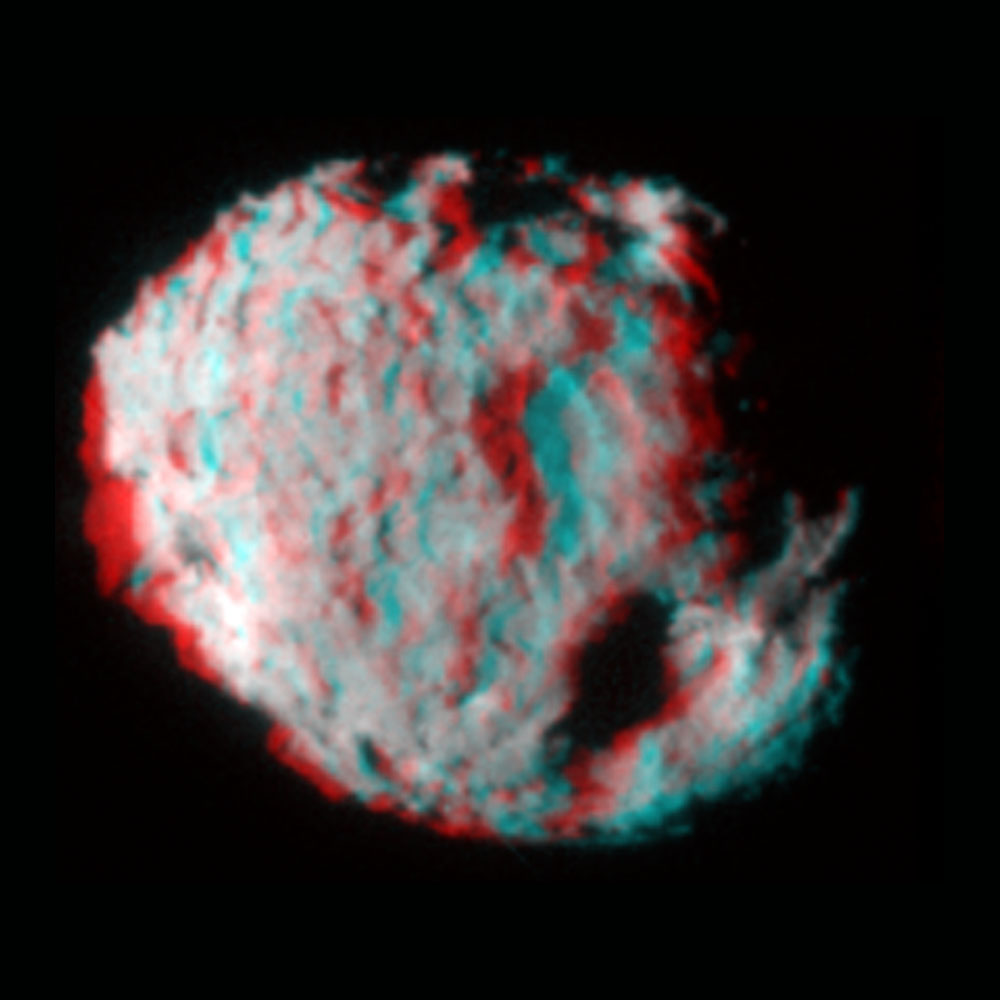
Have you come across more killer 3-D views from space? Are you actually making them? Send along the links to your favorites.
Update for 8:45 p.m. ET: The Planetary Society's Emily Lakdawalla presents a before-and-after animation showing how Phoenix Mars Lander has changed the Martian landscape. You'll also find images that point out the lander's backshell and parachute from the air and from the ground. How cool is that?
Apple Reportedly Looking At Solar Power For Mobile Devices
 (informationweek) -- Apple is reportedly looking into solar panels as a power source for handheld devices and portable computers.
A recently published patent application discovered by the Apple enthusiast site MacRumors.com describes a technique in which solar panels would be built behind a portable device's LCD screen. From that location, the panels could absorb ambient light that passes through.
The technique would eliminate the need for Apple to redesign its iPods and laptops to make room for the new technology, MacRumors said. Among the problems with using solar panels on devices are durability and the need to take up valuable space on the compact devices.
Apple isn't the first to consider this technique for using solar power. Motorola describes a similar approach in a 2001 patent described in the blog TreeHugger.
Apple and technology companies routinely apply for patents on technology that may never find its way into products.
The U.S. Patent Office this year granted Apple a patent that describes a new instant messaging interface for touch-screen devices, such as the iPhone and iPod Touch. The technology lets users manipulate chat conversations in real time by editing old chats. It also enables people to embed video and images, which is something the iPhone can't do today.
In April, Apple filed two patent applications that describe improvements in head-mounted displays, which typically combine one or two small display screens with magnifying lenses inside a helmet or glasses. Apple claimed in the applications that its approach provides a "a wider field of view and [creates] a more natural viewing situation for a user of a head-mounted display, which results in improved comfort and usability for head mounted displays."
In March, an Apple patent application filed described a three-dimensional display system that could be used in computers for displaying 3-D images.
Apple doesn't comment on future products.
Windows 7 to Have Touch-screen Interface
 (pcworld) -- Microsoft demonstrated its multitouch interface for its upcoming Windows 7 operating system on Tuesday. The interface provides a touch-screen input for users to interact with their computers.
Multitouch uses Surface technology, introduced last year by Microsoft, which harnesses touch and multitouch capabilities to provide users with a more natural way to interact directly with computing devices. Expect to see the table-like Surface devices in hotels, retail establishments, restaurants and public entertainment venues, Chris Flores, a director at Microsoft working on the Windows Client Communications Team, said in the Windows Vista Team blog on Tuesday.
In a demo to the Wall Street Journal's D: All Things Digital conference, Julie Larson-Green, Microsoft's corporate vice president for Windows experience program management, showed a number of applications that could use the multitouch technology, including photography applications that enable a user to handle photos on the screen more easily. The user can drag and drop snaps, zoom in, and rotate snaps with his fingers. The musically inclined can play with their fingers on an on-screen piano keyboard.
In a blog entry on Tuesday, Flores said that the long-term architectural investments Microsoft introduced in Windows Vista and then refined for Windows Vista SP1 and Windows Server 2008 will carry forward in Windows 7. Contrary to some speculation, Microsoft is not creating a new kernel for Windows 7, he said. One of the design goals for Windows 7 is that it will run on the recommended hardware specified for Windows Vista and that the applications and devices that work with Windows Vista will be compatible with Windows 7, Flores added.
27 May 2008
YouTube suit called threat to online communication
 A screenshot of YouTube.com, taken on May 21, 2008. (www.youtube.com/Reuters)
NEW YORK (AP/google) -- A $1 billion copyright infringement lawsuit challenging YouTube's ability to keep copyrighted material off its popular video-sharing site threatens how hundreds of millions of people exchange all kinds of information on the Internet, YouTube owner Google Inc. said.
Google's lawyers made the claim in papers filed in U.S. District Court in Manhattan as the company responded to Viacom Inc.'s latest lawsuit alleging that the Internet has led to "an explosion of copyright infringement" by YouTube and others.
The back-and-forth between the companies has intensified since Viacom brought its lawsuit last year, saying it was owed damages for the unauthorized viewing of its programming from MTV, Comedy Central and other networks, including such hits as "The Daily Show with Jon Stewart."
In papers submitted to a judge late Friday, Google said YouTube "goes far beyond its legal obligations in assisting content owners to protect their works."
It said that by seeking to make carriers and hosting providers liable for Internet communications, Viacom "threatens the way hundreds of millions of people legitimately exchange information, news, entertainment and political and artistic expression."
Google said YouTube was faithful to the requirements of the 1998 Digital Millennium Copyright Act, saying the federal law was intended to protect companies like YouTube as long as they responded properly to content owners' claims of infringement.
On that score, Viacom says Google has set a terrible example.
In a rewritten lawsuit filed last month, Viacom said YouTube consistently allows unauthorized copies of popular television programming and movies to be posted on its Web site and viewed tens of thousands of times.
Viacom said it had identified more than 150,000 unauthorized clips of copyrighted programming — including "SpongeBob SquarePants," "South Park" and "MTV Unplugged" episodes and the documentary "An Inconvenient Truth" — that had been viewed "an astounding 1.5 billion times."
The company said its count of unauthorized clips represents only a fraction of the content on YouTube that violates its copyrights.
It said Google and YouTube had done "little or nothing" to stop infringement.
"To the contrary, the availability on the YouTube site of a vast library of the copyrighted works of plaintiffs and others is the cornerstone of defendants' business plan," Viacom said.
New Robot Walks Like You
 Flame weighs about 40 pounds (15 kg) and is 4 feet tall (1.3 meters). It moves
at 1 mph and can negotiate slight steps down. Credit: TU Delft
(livescience) -- A new robot that walks like humans is one of the most advanced of its kind.
Attempts to get robots moving like people typically result in very stilted gaits and limited range of motion.
Human walking is "really very similar to falling forward in a controlled fashion," researchers at TU Delft in The Netherlands explained. "Adopting this method replaces the cautious, rigid way in which robots walk with the more fluid, energy-efficient movement used by humans."
The new robot, Flame, weighs about 40 pounds (15 kg) and is 4 feet tall (1.3 meters). Its got several moving joints attenuated by springs. An inertia sensor (called an "organ of balance") helps keep the 'bot stable. Seven motors get it all going.
Flame can move at 1 mph (0.45 meters per second) and deal with steps down as long as they're not more than one-third of an inch (8 mm).
As it walks, swaying side-to-side like a flat-footed human, Flame uses its organ of balance to dictate how far apart its feet are placed, to prevent falls.
Project leader Daan Hobbelen gets his Ph.D. this week for all the work. Hobbelen said Flame is the most advanced walking robot in the world, at least in the category of robots which apply the human method of walking as a starting principle.
Research done to build the robot provides insight into how people walk, the researchers say, and this could lead to better training and rehabilitation equipment.
Read More......
7 New Silent Hill: Homecoming PS3, Xbox 360 Screens
 (themanroom) -- In Homecoming, players assume the role of Alex Shepherd as he returns to his hometown of Shepherd’s Glen to investigate his brother's disappearance. Before long Alex is battling the forces of evil in Shepherd’s Glen and Silent Hill in hopes of ever saving his brother. Konami has released 7 all-new screenshots for Silent Hill: Homecoming, the fifth entry in the series and first on next-generation consoles.
Silent Hill: Homecoming includes a number of new features such as an all-new graphics engine; enhanced combat system with attacks and counters; more difficult puzzles; an all-new soundtrack by acclaimed series composer Akira Yamaoka; and a healthy serving of un-dead cleavage as revealed by these new screenshots.
Look for Silent Hill: Homecoming on Xbox 360 and PS3 in September.


NVIDIA to Announce Tegra: Computer-on-a-Chip solution
 (hardwarezone) -- Yup, you've read right. NVIDIA is cooking up a new series that's not in their GeForce, nForce, Quadro or Tesla series and it could be a big stir for both AMD and Intel. From what we found out and hints from NVIDIA, the newly trademarked name "Tegra" seems to point towards a SOC (system-on-a-chip) solution. What we know to-date is that NVIDIA and VIA are joining hands to debut a sub US$45 platform, but it's really unclear if this is going to be named Tegra or some other new-fangled development that's been under-wraps.
Fortunately, we needn't wait long as come Computex 2008 on 3rd June 2008, NVIDIA will announce this new development of the Tegra branded family. Will it be a CPU-GPU combo chip or a new platform for the mobile computing space or a new device for handhelds or something completely unfathomed? The curtain will unveil soon enough in less than two weeks. So stay tuned as the Hardware Zone team prepares itself to set a temporary base in Taipei for all the latest developments direct from Computex.
Visit Sapphire Technology at Computex 2008 Taipei
 Taipei, Taiwan (hardwarezone) -- This year, the Asia’s biggest exhibition “Computex 2008” is being staged at the new exhibition center—TWTC Nangang Exhibition Hall and TWTC Hall1, TWTC Hall3 and Grand Hyatt Taipei.
Sapphire Technology will also join the world’s leading IT show, and Sapphire will show you the newest series gaming graphics and professional workstation graphics, mainboard, digital photo frame, TV tuner etc….
This is the first global exhibition of Sapphire workstation graphics group after being the AMD authorized exclusive partner in Asia Pacific (except Japan), it is a big step of Sapphire and it also means Sapphire is not only the gaming graphic’s leader but also eligible to involve in this professional high-end workstation graphics market.
In the Computex show, Sapphire will display the most high-end graphics ATi FireGL V8650 which built-in 2GB high speed memory with a huge 56” inch LCD monitor along with double duel-link (Maximum Resolution: 3840X2160). This is the world superior and the debut of 56” quad full high definition LCD monitor collocate with ATI FireGL V8650 solution demo. The unprecedented accuracy must makes you fully enjoy in this truly visual experience. ATI FireGL is completely designed for CAD/CAM industry design, Digital Content Creation, GIS analysis and high- precision medical equipment.
"ATI FireMV multi-view is the best solution for the “one card-quad monitor display”, and it can also process with four different works independently. The special features such as low power consumption and half length have been got lots of internal enterprise’s affirmation. For instance, NASA, UPS, American Airline, Bloomberg, United State Postal Service… are all ATI FireMV long-term customers .
The other hot subject will be the newest display interface ”Display Port”. Sapphire will show you the first workstation graphics which are available to support Display Port?
Want to see more exciting new products!! Visiting our Sapphire Technology Suite in Grand Hyatt Taipei Room 2401
Date: June 3-June 6
Time: 9:00-18:00
Venue: Grand Hyatt Taipei Suite 2401
For more information, please visit Sapphire website
http://workstation.sapphiretech.com/computex2008/computex2008.html
Motorola Powers TETRA with new Fuel Cell Technology at TETRA World Congress 2008 in Hong Kong
 (RTTNews) -- Motorola Inc. announced that it is showing Dimetra IP TETRA base station with fuel cell at TETRA World Congress in Hong Kong. The company said that fuel cell incorporates reformer so that the base station can run using water/methanol mix. This would overcome any supply issues associated with hydrogen and makes fuel cell viable solution in many more locations.
The company also added that fuel cells can also be used to charge TETRA radios in remote locations. Fuel cell technology would complement wind and solar power to provide very high levels of availability in all seasons and extremes of climate. Further announcements will be made during 2008 on application of this technology in mission critical applications.
26 May 2008
British Crook Banned from YouTube
 (pcworld) -- A man who posted more than 80 videos of himself and others apparently committing crimes on Google's YouTube video-sharing website has been banned from uploading any more clips or images of himself.
Speeding, taking drugs, setting off fireworks in a wheelie bin and refusing to pay a taxi fare were among the offenses that Andrew Kellett is alleged to have committed in clips posted on the site. In response to his antics, Leeds Magistrates' Court issued him with an Anti-Social Behaviour Order (Asbo) that prevents him posting any more videos or images of his activities.
Kellet, who was called "Leeds' dumbest criminal" by a Leeds Councillor, claimed the ban restricted his freedom of speech and that he was simply an innocent bystander recording events.
If he breaches the terms of the Asbo, Kellet may face an immediate jail sentence.
NASA spacecraft successfully lands on Mars
 This image provided by NASA, JPL-Caltech and the University of Arizona shows a portion of the Phoenix Mars Lander after it landed on Mars on Sunday, May 25, 2008. The spacecraft touched down in the northern polar region of the planet after a 422 million-mile flight from Earth. (AP Photo/NASA, JPL-Caltech, University of Arizona)
PASADENA, Calif. (AP/google) -- A NASA spacecraft plunged into the atmosphere of Mars and successfully landed in the Red Planet's northern polar region on Sunday, where it will begin 90 days of digging in the permafrost to look for evidence of the building blocks of life.
Cheers swept through mission control at NASA's Jet Propulsion Laboratory when the touchdown signal from the Phoenix Mars Lander was detected after a nailbiting descent. Engineers and scientists hugged and high-fived one another.
"In my dreams it couldn't have gone as perfectly as it went," project manager Barry Goldstein said. "It went right down the middle."
The first images transmitted from the lander about two hours after landing showed one of its feet sitting on Martian soil amid tiny rocks and a view of the horizon of the arctic plain. Another image showed that the lander's solar panels had deployed.
The early pictures were primarily to give engineers information on the condition of the lander including its power supply and the health of its science instruments. The solar panels were designed to not unfurl until after the dust settled.
Initial results show Phoenix landed almost level, tilted at a quarter of a degree.
"The hardest part is over. There's still a lot of drama left," said Goldstein, who kept up a JPL tradition by passing out bowls of lucky peanuts during the landing.
Phoenix plunged into the Martian atmosphere at more than 12,000 mph after a 10-month, 422 million-mile voyage through space. The lander kept in contact with Earth through the orbiting Mars Odyssey during the entire "seven minutes of terror."
It performed a choreographed dance that included unfurling its parachute, shedding its heat shield and backshell, and firing thrusters to slow to a 5 mph touchdown. The radio signal confirming the landing came at 4:53 p.m. PDT.
"Touchdown detected!! We're on the surface of Mars and there is celebration in Mission Control!!" JPL engineer Brent Shockley blogged from inside mission control.
It's the first successful soft landing on Mars since the twin Viking landers touched down in 1976. NASA's twin rovers, which successfully landed on Mars four years ago, used a combination of parachutes and cushioned air bags to bounce to the surface.
Mission chief scientist Peter Smith of the University of Arizona, Tucson, had two words to describe the landing: "Picture perfect."
Phoenix's landing is a relief for NASA since Mars has a reputation of swallowing spacecraft. More than half of all nations' attempts to land on Mars have failed.
Phoenix's target landing site was 30-mile-wide shallow valley in the high northern latitudes similar in location to Earth's Greenland or northern Alaska. The site was chosen because images from space spied evidence of a reservoir of frozen water close to the surface.
Like a tourist in a foreign country, the lander initially will take in the sights during its first week on the Red Planet. It will talk with ground controllers through two Mars orbiters, which will relay data and images.
Phoenix is equipped with an 8-foot-long arm capable of digging trenches in the soil to get to ice that is believed to be buried inches to a foot deep. Then it will analyze the dirt and ice samples for traces of organic compounds, the chemical building blocks of life.
The lander also will study whether the ice ever melted at some point in Mars' history when the planet had a warmer environment than the current harsh, cold one it currently has.
Scientists do not expect to find water in its liquid form at the Phoenix landing site because it's too frigid. But they say that if raw ingredients of life exist anywhere on the planet, they likely would be preserved in the ice.
Phoenix, however, cannot detect signs of alien life that may exist now or once existed.
The only other time NASA searched for chemical signs of life was during the Viking missions. Neither lander found conclusive evidence of life.
Phoenix avoided the doom of its sister spacecraft, the Mars Polar Lander, which in 1999 crashed into the south pole after prematurely cutting off its engines. The Polar Lander loss, along with the earlier loss of an orbiter the same year, forced NASA to overhaul its Mars exploration program.
Phoenix, named after the mythical bird that is reborn from its ashes, inherited hardware from a lander mission that was scrapped after the back-to-back Mars losses, and carries similar instruments that flew on Polar Lander.
Built by Lockheed Martin Corp., Phoenix is the first mission from NASA's Scout program, a lower-cost complement to the space agency's pricier Mars missions. It cost $420 million to develop and launch Phoenix compared to the $820 million originally invested in the twin rovers.
The rovers have dazzled scientists with their Energizer Bunny-like ability to keep going and their geologic findings that ancient Mars once had water that flowed at or near the surface.
Mission managers do not expect Phoenix to be as hardy as the rovers since winter will set in later this year at the landing site with fewer hours of sunlight available each day to power the lander's solar panels.
On the Net:
Browsers Are a Battleground Once Again
 Browser developer Mozilla plans to release Firefox 3.0 in June.
Illustration by James C. Best Jr./The New York Times
SAN FRANCISCO (nytimes) -- The browser, that porthole onto the broad horizon of the Web, is about to get some fancy new window dressing.
Next month, after three years of development and six months of public testing, Mozilla, the insurgent browser developer that rose from the ashes of Netscape, will release Firefox 3.0. It will feature a few tricks that could change the way people organize and find the sites they visit most frequently.
Not to be outdone, Microsoft recently took the wraps off the first public test version of the latest edition of Internet Explorer, which is used by about 75 percent of all computer owners, according to Net Applications, a market share tracking firm. The finished version of Internet Explorer 8 could be released by the end of the year and is expected to have additional features.
Even Apple, which once politely kept its Safari browser within the confines of its own devices, is making a somewhat controversial push to get it onto the computers of people who use Windows PCs.
In other words, the browser war — the skirmish that landed Microsoft in antitrust trouble in the ’90s — is heating up again.
“The typical browser for today’s consumer doesn’t look all that different than it did 10 years ago,” said Larry Cheng, a partner at Fidelity Ventures, one of the firms that invested in Flock, a browser start-up. “That is an unsustainable trend that is the launching point for the second browser war, which will not be won by monopolistic muscle but by innovation.”
Browsers have always been viewed as crucial on-ramps to the Web. Nevertheless, after vanquishing Netscape, the first commercial browser developer, Microsoft waited five years before releasing the sixth version of Internet Explorer in 2006. Dean Hachamovitch, general manager of Microsoft’s Internet Explorer group, says the company was focused on plugging security holes during that time.
America Online, which acquired Netscape, spun off the nonprofit Mozilla Foundation in 2003. Its Firefox browser soon inspired an open-source movement backed by computer enthusiasts. Early versions of Firefox introduced features like a built-in pop-up blocker to kill ads, and tabbed browsing, which lets users toggle between Web windows.
Firefox now has 170 million users around the world and an 18 percent share of the browser market, according to Net Applications. That is especially impressive given that most of its users have made the active choice to download the software, while Internet Explorer is installed on most PCs at the factory.
In addition to giving Microsoft a kick in its competitive pants, Firefox has also reinforced for the high-tech industry the financial and strategic value of the browser. In 2004, Google struck a deal with Mozilla to include a Google search box tucked into a corner of the Firefox browser. According to Mozilla’s most recent tax documents, in 2006 Google paid Mozilla $65 million for the resulting traffic to its search listings.
With tasks like e-mail and word processing now migrating from the PC to the Internet, analysts and industry players think the browser will soon become even more valuable and strategically important.
“People in the industry foresee a time in which for many people, the only thing they’ll need on a computer is a browser,” said Mitch Kapor, the software pioneer who now sits on the board of the Mozilla Foundation and has created a start-up, FoxMarks, that is developing a tool to synchronize bookmarks between computers. “The browser is just extraordinarily strategic.”
That notion has helped to rekindle the browser wars and has resulted in the latest wave of innovation. Firefox 3.0, for example, runs more than twice as fast as the previous version while using less memory, Mozilla says.
The browser is also smarter and maintains three months of a user’s browsing history to try to predict what site he or she may want to visit. Typing the word “football” into the browser, for example, quickly generates a list of all the sites visited with “football” in the name or description.
Firefox has named this new tool the “awesome bar” and says it could replace the need for people to maintain long and messy lists of bookmarks. It will also personalize the browser for an individual user.
“Sitting at somebody else’s computer and using their browser is going to become a very awkward experience,” said Mitchell Baker, chairwoman of the Mozilla Foundation.
Internet Explorer 8, from Microsoft, promises its own set of tricks. One new tool, Web slices, allows a user to bookmark a dynamic piece of a Web site, like an online auction or a sports score, and save it in the margin of the browser, where the user can watch as it changes.
Another new feature, called activities, allows users to highlight text on a page, click on it, then instantly send it to another site, like a mapping, e-mail or blogging service.
Asked whether Firefox’s increasing popularity had motivated these and other improvements, Mr. Hachamovitch of Microsoft said only, “We love to compete.” But he did say that amid the new competitive pressures, “the quality and quantity of my team has gone up significantly.”
His group will have one other company besides Mozilla to keep its eye on: Apple’s Safari Web browser has a little over 5 percent of the market, according to Net Applications, and subsists mostly on the loyalty of devoted Mac and iPhone owners.
But in March, deploying the kind of strategic jujitsu more commonly associated with Microsoft in the past, Apple began using the automatic update software that is packaged with its iTunes music player to deliver Safari onto the computers of people who use Windows. (Users had to specifically decline the Safari offer if they didn’t want the browser to be downloaded to their computers.)
The tactic irked even Apple fans in the blogosphere, along with Apple’s browser rivals. But it was at least partly successful: Net Applications reported that Apple’s market share on Windows computers had tripled since March.
In a statement released last month addressing the comments about the maneuver, Apple said it had made it easier for customers to distinguish minor updates from new programs delivered through the update software.
Apple’s boldness underscores the new importance of the Web browser in a world that is increasingly shifting online.
Shawn Hardin, chief executive of Flock, which is developing a browser that helps users share photos, videos and blog entries more easily, said consumers would ultimately benefit from the new browser battle.
“We are seeing choice in the browser market really emerge as a significant force for the first time in a while,” Mr. Hardin said. Read More......
Samsung Electronics unveils new SSD
 SEOUL (AFP) -- Samsung Electronics Co, the world's largest computer chip maker, said Monday it has developed a new solid-state drive which is expected to replace hard disk drives in laptop computers.
Samsung said its 256-gigabyte solid state drive (SSD) for data storage is 2.4 times faster than traditional hard drives. The company plans to begin production of SSDs this year.
The new SSD "represents a bold step in the shift to notebooks with significantly improved performance and larger storage capacities," the company said in a statement.
Samsung described the new SSD, 2.5 inches long and 9.5 millimeters thick, as the world's smallest of its kind. It can read up to 200 megabytes of data per second.
It said, citing market research agency iSuppli, that 35 percent of notebook computers would use the SSD by 2012.